Analysis Report: The 2026 US-Iran War and Its Impact on China’s Economic Trajectory
The outbreak of direct military conflict between the United States, Israel, and Iran on February 28, 2026, has sent immediate shockwaves through global markets. With the conflict rapidly expanding to target energy infrastructure—including the South Pars gas field and Gulf oil facilities—and Iran threatening the complete closure of the Strait of Hormuz, the global economic landscape has been fundamentally altered.
For China, the world’s largest importer of crude oil and a heavily export-dependent economy, this war presents a complex matrix of severe short-term economic shocks and unique long-term strategic opportunities.
1. Current Economic Impacts (As of March 2026)
The Energy Shock and Imported Inflation
The most immediate and severe impact on China is the disruption of Middle Eastern energy supplies. With over 70% of China’s oil imported—a significant portion navigating through or originating near the Persian Gulf—the spike in global oil prices has drastically increased input costs for Chinese industries.
- Manufacturing Squeeze: High energy and raw material prices are compressing profit margins for China’s vast manufacturing sector. Because domestic consumer demand remains fragile, factories are struggling to pass these increased costs onto consumers, leading to a severe margin squeeze.
- Inflation Dynamics: While China has been battling deflationary pressures over the last two years, the sudden surge in energy prices threatens to create “stagflation” conditions—where imported inflation rises, but domestic economic growth stagnates.
Supply Chain and Maritime Trade Disruption
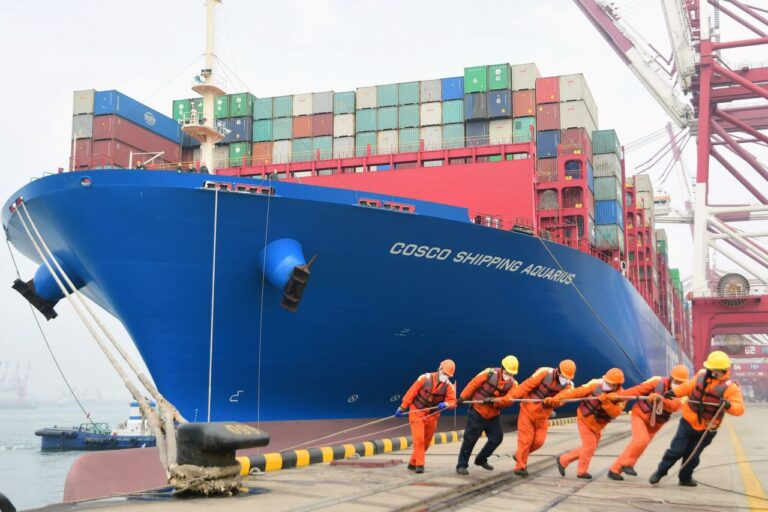
The war has essentially paralyzed commercial shipping in the Persian Gulf and severely restricted the broader Indian Ocean and Red Sea routes.
- Freight Rate Surge: The cost of shipping goods from China to Europe, the Middle East, and parts of Africa has skyrocketed as vessels are forced into massive detours.
- Export Delays: The logistics bottleneck is causing delays in the delivery of Chinese exports, threatening the country’s trade balance in the first quarter of 2026 and undermining the export-led recovery Beijing was banking on.
2. Future Possibilities and Strategic Outlook for 2026
Despite the immediate headwinds, the crisis is forcing structural shifts that Beijing may leverage to its advantage over the medium to long term.
A. Pressure on the 2026 GDP Target
The central government’s newly set 2026 growth target of 4.5%–5.0% is now under extreme pressure. If the Strait of Hormuz is closed or regional energy production remains crippled for an extended period, the resulting global recession will severely dampen international demand for Chinese goods. To counter this, Beijing will likely be forced to expand its fiscal deficit beyond the currently planned 4.0%, potentially issuing further ultra-long-term sovereign bonds to subsidize domestic energy costs and stimulate internal consumption.
B. Acceleration of Energy Independence and “Green Tech”
The vulnerability exposed by the Middle East crisis will hyper-accelerate China’s pivot toward energy independence.
- The “New Trio” Boom: We can expect massive, fast-tracked state investment into China’s green technology sectors—specifically electric vehicles (EVs), solar energy, and battery storage. The strategic imperative to move away from imported fossil fuels aligns perfectly with the government’s push for “New Quality Productive Forces.”
- Russian and Central Asian Realignment: China will likely deepen its overland energy reliance on Russia and Central Asian nations, securing long-term, fixed-price contracts that bypass vulnerable maritime chokepoints.
C. Financial De-dollarization and the “Petroyuan”
With the US heavily engaged in a new Middle Eastern theater and deploying its financial weaponization (sanctions) once again, non-aligned countries are growing increasingly wary of the dollar system.
- Currency Opportunity: China has a crucial window to accelerate the internationalization of the Renminbi (RMB). By offering to settle oil and gas trades in Yuan with Gulf states looking to hedge against US volatility, the “Petroyuan” could see its most significant leap in adoption to date.
D. Geopolitical “Breathing Room” in the Indo-Pacific
Strategically, the massive deployment of US military and financial resources to the Middle East (with the Pentagon already reporting costs exceeding $11.3 billion in the opening days alone) diverts Washington’s focus from the Indo-Pacific. This distraction may provide Beijing with critical diplomatic and economic breathing room in its immediate neighborhood, allowing it to consolidate trade relationships in Southeast Asia and the Global South with less direct US interference.
Conclusion
The 2026 US-Iran war acts as a massive stress test for China’s economy. In the short term, Beijing must navigate the perilous waters of energy shortages, soaring freight costs, and imported inflation, which heavily threaten its annual GDP targets. However, if managed effectively, the crisis will serve as a catalyst for China’s long-term strategic goals: expediting the transition to green energy, advancing the global use of the Yuan, and capitalizing on a distracted United States to strengthen its economic sovereignty.