2026 China Economic Outlook and Business Opportunities
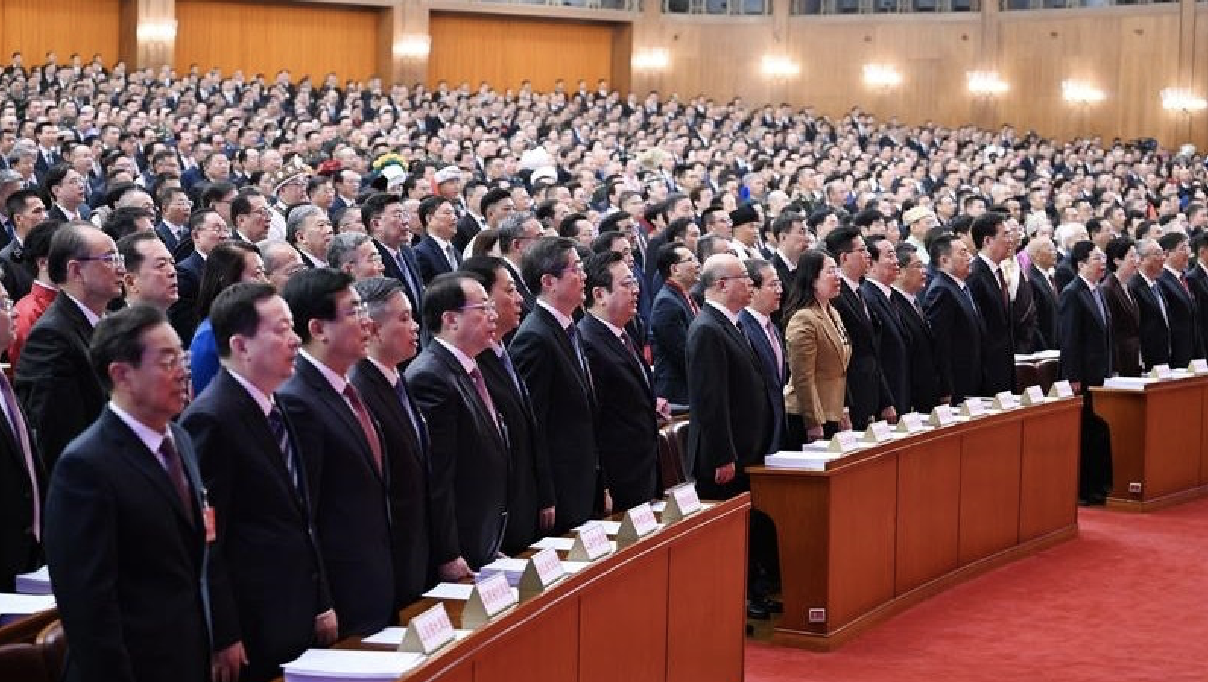
The 2026 “Two Sessions” (National People’s Congress and Chinese People’s Political Consultative Conference) mark a pivotal moment as China launches its 15th Five-Year Plan (2026–2030). The government has outlined a recalibrated strategy that pivots away from “growth at any cost” toward a more resilient, technology-driven, and sustainable economic model.
Below is an analysis of the economic outlook and emerging business opportunities for 2026.
I. 2026 Economic Outlook: A Pragmatic Recalibration
1. Lowered, Flexible Growth Target
- Target: GDP growth is set at a range of 4.5%–5.0%, shifting from the previous fixed “around 5%” targets.
- Implication: By adopting a range and pledging to “strive for better in practice,” Beijing is giving itself the flexibility to tolerate slightly slower baseline growth. This allows policymakers to prioritize structural reforms, manage local government debt, and absorb external geopolitical shocks without the pressure of forced stimulus.
2. Key Economic Indicators | Metric | 2026 Target | Note | | :— | :— | :— | | Fiscal Deficit | ~4.0% of GDP | Supported by RMB 800 billion in ultra-long-term special treasury bonds. | | New Urban Jobs | > 12 Million | Focused on maintaining labor market stability. | | Urban Unemployment | ~5.5% | Target ceiling for urban areas. | | Inflation (CPI) | ~2.0% | Aims to counter persistent deflationary pressures. | | CO2 Intensity | -3.8% | Part of a broader 17% cumulative reduction goal by 2030. |
3. Fiscal Support and Domestic Demand While massive infrastructure bailouts are absent, targeted fiscal policy takes the lead. Local governments are permitted to issue RMB 4.4 trillion in special-purpose bonds. Meanwhile, to boost internal consumption, RMB 250 billion has been allocated for the consumer goods “trade-in” program (down slightly from 2025), alongside a new Urban and Rural Residents Income Growth Plan to address sluggish household spending.
II. Future Business Opportunities
The 15th Five-Year Plan explicitly targets the digital economy to reach 12.5% of GDP by 2030, underpinned by a mandate for annual R&D spending to grow by over 7%. This creates distinct commercial runways:
1. The “AI-Plus” Initiative and Deep Tech
- Opportunity: The government is pushing for the large-scale commercial application of AI, targeting over 90% penetration of AI agents across industries by 2030.
- Sectors: Hyperscale intelligent computing clusters, embodied AI, quantum technology, and 6G. Businesses providing AI integration for advanced manufacturing will see massive state-backed demand.
2. The “Low-Altitude Economy” and Green Tech
- Opportunity: With a strict mandate to cut CO2 emissions, clean energy remains a priority. Furthermore, the “low-altitude economy” has been officially highlighted as a key pillar for new growth.
- Sectors: Commercial drone logistics, autonomous aerial vehicles (eVTOLs), and green technology (hydrogen development and renewable energy storage).
3. The “Silver Economy” and Healthcare
- Opportunity: Demographic shifts have elevated healthcare and elderly care to strategic priorities, aiming to transform an aging population into a new consumption driver.
- Sectors: Preventive health industries, elderly-care infrastructure, biotech, and pharmaceuticals (notably, China is introducing market and data exclusivity for innovative drugs for the first time).